


Mihon: Manga Comic Library
BAV STUDIO
I spent time with Mihon as a practical reading-library app rather than treating it like a simple comic viewer. Its main appeal is the way it brings manga, comics, and stories into one place, then gives you a more organized way to return to them. That sounds straightforward, but it changes how the app feels in daily use: instead of remembering where every title lives, I can build a reading routine around a single library.
Mihon is a free comics app from BAV STUDIO, aimed at readers who want discovery and organization together. It is listed for Everyone and works on Android 7.0 or later, which makes it accessible on many older devices as well as newer phones. The current release is version 1.0.4, and the app has passed the ten-thousand-install mark. Those details do not tell me whether it will fit every reader, but they do place it as a focused library tool rather than a broad entertainment platform.
How I use Mihon for a repeatable reading routine
Starting with a clean library
My first useful step was resisting the urge to add everything immediately. Mihon becomes easier to manage when the library reflects what I actually intend to read. I would begin with a small group of current titles, a few completed stories, and perhaps one or two series I want to sample. That simple separation makes the app feel less like a storage box and more like a personal reading shelf.
The basic workflow is easy to understand. I discover a title, decide whether it deserves a place in my library, and then return to that collection when I have time to read. That is more useful than repeatedly searching for the same comic, especially when I read in short sessions. A commute, a lunch break, or a few minutes before bed becomes enough time to continue something without rebuilding the context each time.
For a realistic everyday example, I might use Mihon after work to check the titles I have already started instead of browsing aimlessly. I can choose one story for a longer session and keep a lighter comic available for a quick break. This small habit reduces decision fatigue. The app is at its best when I treat it as a reading queue, not as an endless catalogue that I must constantly reorganize.
Related News

Why WhatsApp Messenger Still Makes Everyday Communication Feel Easy

Jurassic World: The Game Is the Better Dino Tycoon for Strategic Players

Threads in Real Life: Who Should Join, Lurk, or Leave

How SHEIN Turned Shopping Into an Endless Content Feed

How to Make Fortnite Feel Smarter on Mobile

Should You Switch to Microsoft Outlook on Mobile?
Discovery and library building are different jobs
One of the more important distinctions I noticed is that discovering a title and managing a title require different attention. Discovery is about curiosity: finding a new manga, comic, or story that might be worth trying. Library management is about future convenience: making sure the titles I care about are easy to find again. Mihon connects those activities, but I still need to make the judgment call about what belongs in my collection.
That is where the app can be more useful than a standard reading app with a single recent-items list. A recent list tells me what I opened last. A personal library tells me what I deliberately want to keep following. If I read many unrelated titles, that difference matters. It also helps when I pause a series for several weeks and want to return without relying on memory.
I recommend adding titles in stages. After trying a new story, I would ask whether I genuinely plan to continue it. If the answer is uncertain, leaving it outside the main library keeps the collection focused. This is a non-obvious improvement because the fastest library is not necessarily the largest one; it is the one where every item has a clear reason to be there.
Gallery
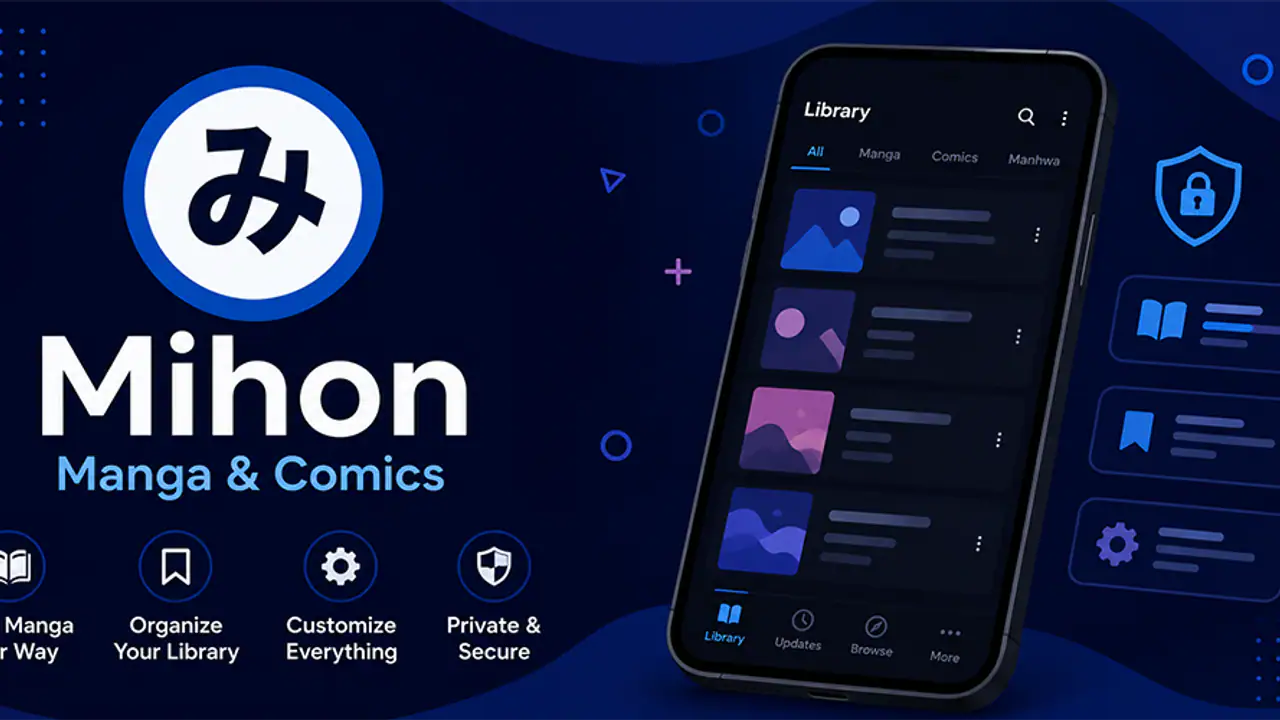
What the app feels like in ordinary use
The strongest part of Mihon is its sense of continuity. It is designed around the idea that reading is not always one uninterrupted event. I may open a title on one day, switch to another the next day, and come back later. A dedicated library gives that pattern a home, which is especially helpful for people who follow several long-running stories at once.
At the same time, Mihon is not automatically a complete replacement for every comic service. Readers who expect a polished editorial feed, strong social recommendations, or a highly guided reading experience may prefer a more mainstream alternative. Mihon feels more personal and hands-on. That is a strength for organized readers, but it also means I have to participate in the organization instead of expecting the app to make every decision for me.
Settings I would check before building a large collection
I would not begin by changing every option I can find. A better approach is to check the settings that affect how I browse, read, and maintain the library, then adjust only what supports my habits. The goal is to remove repeated friction. If a setting does not solve a problem I actually have, I leave it alone.
The first area worth reviewing is the reading experience. I would pay attention to how pages or panels behave, how comfortable the display feels during longer sessions, and whether the chosen presentation suits the type of material I read. Manga, western comics, and text-heavy stories do not always benefit from the same viewing rhythm. A layout that feels fine for one title may feel awkward for another, so I prefer settings that let me adapt rather than forcing one universal style.
I would also inspect library organization options before adding dozens of titles. Sorting and grouping choices can determine whether a collection remains useful later. For example, a reader who follows many series may benefit from an arrangement based on recent activity, while someone who treats the app as an archive may prefer a more stable alphabetical structure. The right choice depends on whether my next action is usually “continue reading” or “find a specific title.”
My practical rule is to optimize for the action I repeat most often. If I open Mihon mainly to continue unfinished stories, I want the library to surface those titles quickly. If I use it to browse and compare new material, I need discovery to stay visible. This avoids a common mistake: copying someone else’s setup even though their reading habits are completely different.
Small adjustments that save time later
I would keep the collection tidy from the beginning rather than planning a major cleanup later. A title that no longer interests me should not remain beside the series I actively follow. Likewise, a completed story can be treated differently from a title still in progress. Even without turning the app into a complicated database, those decisions make the library easier to scan.
Another useful habit is checking the app after a reading session instead of waiting until the library becomes confusing. If I finish a chapter or decide to pause a series, I can make the relevant change while I still remember why. This takes less effort than trying to reconstruct my reading history weeks later.
Readers using an older Android phone should also approach settings with restraint. Mihon supports Android 7.0 and later, which is welcome for compatibility, but an older device may feel less comfortable with an overfilled library or an unnecessarily elaborate workflow. I would begin with a modest collection, learn how the app behaves on that phone, and expand gradually. That is more reliable than assuming that compatibility automatically means the same experience on every device.
Faster patterns for regular readers
Once the basic library is working, the next improvement comes from reducing repeated choices. I like to keep a small “active rotation” in mind: a few titles I am currently reading, rather than opening the entire collection every time. This creates a simple mental shortcut. When I have only a few minutes, I choose from the active rotation; when I want something new, I deliberately switch into discovery mode.
This approach is particularly helpful for readers who jump between genres. A long dramatic manga may suit a quiet evening, while a short comic works better during a break. Keeping both available prevents me from abandoning a title simply because it does not fit the moment. Mihon’s value here is not that it chooses for me, but that it gives me a stable place to maintain those choices.
I would also use consistent naming and organization habits where the app allows them. The exact arrangement matters less than consistency. If I keep changing how I classify titles, the library becomes another task. If I use the same logic every time, I can predict where a title will be and find it without searching repeatedly.
Shortcuts should support habits, not replace them
Experienced users often talk about shortcuts as if they are the main secret to speed. In my experience, the bigger gain comes from deciding what I want to do before opening the app. A shortcut into a messy library only gets me to the mess faster. A shortcut into a carefully maintained reading list is genuinely useful.
My preferred pattern is simple: open Mihon, go straight to the titles I am following, choose one based on the time available, and leave the library in a clear state when I finish. If I am exploring, I browse separately and avoid mixing every interesting discovery into my active reading group. This keeps the app responsive to my intentions instead of turning every session into unplanned browsing.
For a reader with a large collection, I would recommend periodic maintenance in small batches. Removing abandoned titles, separating finished stories, and revisiting old additions can be done a few minutes at a time. Trying to reorganize everything in one sitting is more likely to become frustrating, especially if the collection has grown without a consistent system.
Where Mihon is stronger than usual alternatives
Compared with a basic comic reader, Mihon has a clearer identity as a library and discovery companion. A basic reader may be excellent for opening a file or continuing one local title, but it often offers less help when the reading list becomes varied. Mihon makes more sense for someone who wants a broader personal collection and a repeatable way to return to it.
Compared with a mainstream subscription-oriented comic platform, the trade-off is different. Those services may feel more polished for guided discovery and curated reading, while Mihon appeals to readers who want more control over how their collection is arranged. I prefer Mihon when I already know what kind of reading workflow I want. I would lean toward a conventional platform if I mainly want someone else to recommend what to read next and present everything in a highly finished package.
It also differs from a simple bookmarks folder. Bookmarks are useful for saving pages, but they rarely create a satisfying overview of an ongoing reading life. Mihon is more deliberate: titles are treated as part of a collection, not merely as isolated places to return to. That distinction becomes more valuable as the number of series grows.
Limits that experienced users should understand
Mihon is not a magic solution for disorganized reading. If I add every title that catches my attention, the library can become noisy. The app gives me a framework, but the quality of that framework depends on the choices I make. Readers who want zero maintenance may find this less convenient than a service that automatically manages recommendations and recent activity.
There is also a learning curve in deciding how to arrange a personal collection. New users may spend time experimenting before finding a comfortable pattern. That is not necessarily a flaw, but it does mean Mihon rewards intentional use. Someone looking for a single button that handles discovery, organization, and reading without any setup may feel that the app asks too much.
Another limitation is that a reading library can encourage collecting instead of reading. I noticed that it is easy to feel productive while organizing titles, even when I have not actually continued a story. My solution is to keep discovery sessions separate from reading sessions and to judge the app by how quickly I reach the next chapter, not by how impressive the library looks.
Who should choose it, and who should skip it
I would recommend Mihon to manga and comic readers who follow several stories, like arranging their own collections, and want a free app focused on personal reading continuity. It is also a good fit for people who switch between short and long reading sessions, because a maintained library makes those transitions easier.
I would be more cautious about recommending it to someone who reads only one occasional title, dislikes organizing apps, or expects a fully curated entertainment service. That person may get more value from a simpler reader or a conventional comic platform. Mihon becomes worthwhile when the library itself is part of the problem the user wants to solve.
The Everyone content rating also makes it broadly approachable from an age-classification perspective, but I would still make individual reading choices carefully. A general rating does not replace personal judgment about whether a particular story suits a reader’s preferences. The app’s broad accessibility is useful, yet the titles a person chooses remain the more important part of the experience.
My verdict after settling into the workflow
Mihon works best when I use it with a repeatable system: keep the library focused, separate active reading from casual discovery, review the settings that affect browsing and reading, and make small maintenance decisions regularly. Those habits reveal the app’s real strength. It is not simply a place to open comics; it is a tool for making a scattered reading life easier to manage.
I appreciate that it is free and available on older Android versions, because that lowers the barrier for readers who do not have a recent phone. I also like the balance between discovery and organization. The experience is less automatic than some mainstream alternatives, but that is precisely why it can feel more personal once the workflow is established.
My final recommendation is straightforward: choose Mihon if you want control over your manga and comic library and are willing to spend a little time shaping it. Skip it if you want a completely hands-off catalogue with editorial guidance at every step. For me, the app earns its place by turning “what should I read next?” into a manageable decision instead of another round of searching. Its best feature is the reading habit it helps me build.
FAQs for Mihon: Manga Comic Library
What is Mihon: Manga Comic Library, and what can I use it for?
Mihon is an open-source Android manga and comic reader that lets you organize your library and read content through compatible online sources or locally stored files. After installation, you can browse available extensions, add titles to your library, track reading progress, download chapters for offline use, and customize the reading experience. It is primarily designed for Android phones and tablets.
Is Mihon: Manga Comic Library free to download and use?
Mihon is generally available as free, open-source software, so the application itself does not normally require a subscription or payment to use its core features. However, the manga and comic sources connected to the app may have their own rules, advertisements, account requirements, or restrictions. Users should also verify that accessing and downloading specific content is legal in their country.
How do I read manga or comics in Mihon?
After installing Mihon, you typically add compatible extensions or import files stored on your device. You can then search for a series, open its chapter list, and add the title to your library. Chapters may be read online or downloaded for offline access, depending on the source. The app also offers reading settings such as page direction, brightness controls, scaling options, and continuous or paginated viewing.
Does Mihon work on iPhone or iPad?
Mihon is primarily developed for Android devices and is not generally available as an official iOS application. iPhone and iPad users should be cautious of websites claiming to offer an official Mihon iOS download, because unofficial copies may be unsafe or misleading. If you use iOS, check the project’s official documentation and trusted channels for current compatibility information before installing anything.
Is Mihon safe to use, and what should I know about extensions?
The Mihon application is open source, but your overall experience also depends on the extensions and content sources you install. Extensions can connect the app to third-party websites, which may change availability, display advertisements, request permissions, or present security and privacy risks. Download Mihon only from a trusted official project location, review permissions carefully, keep the app updated, and avoid suspicious extensions or unknown APK files.
Pros
- Open-source and free
- with no subscription or intrusive advertising.
- Supports many catalog sources through customizable extensions.
- Excellent reading controls
- including page direction and zoom options.
- Downloads chapters for convenient offline reading.
- Syncs reading progress with services such as AniList and MyAnimeList.
Cons
- Extensions may require manual installation and occasional troubleshooting.
- Source availability and content quality vary between extensions.
- The interface can feel technical for first-time users.
- Some sources may stop working when websites change their systems.
- It does not provide official licenses for every manga title.


